Easy Thai Red Curry (Better Than Takeout)
This post may contain affiliate links.
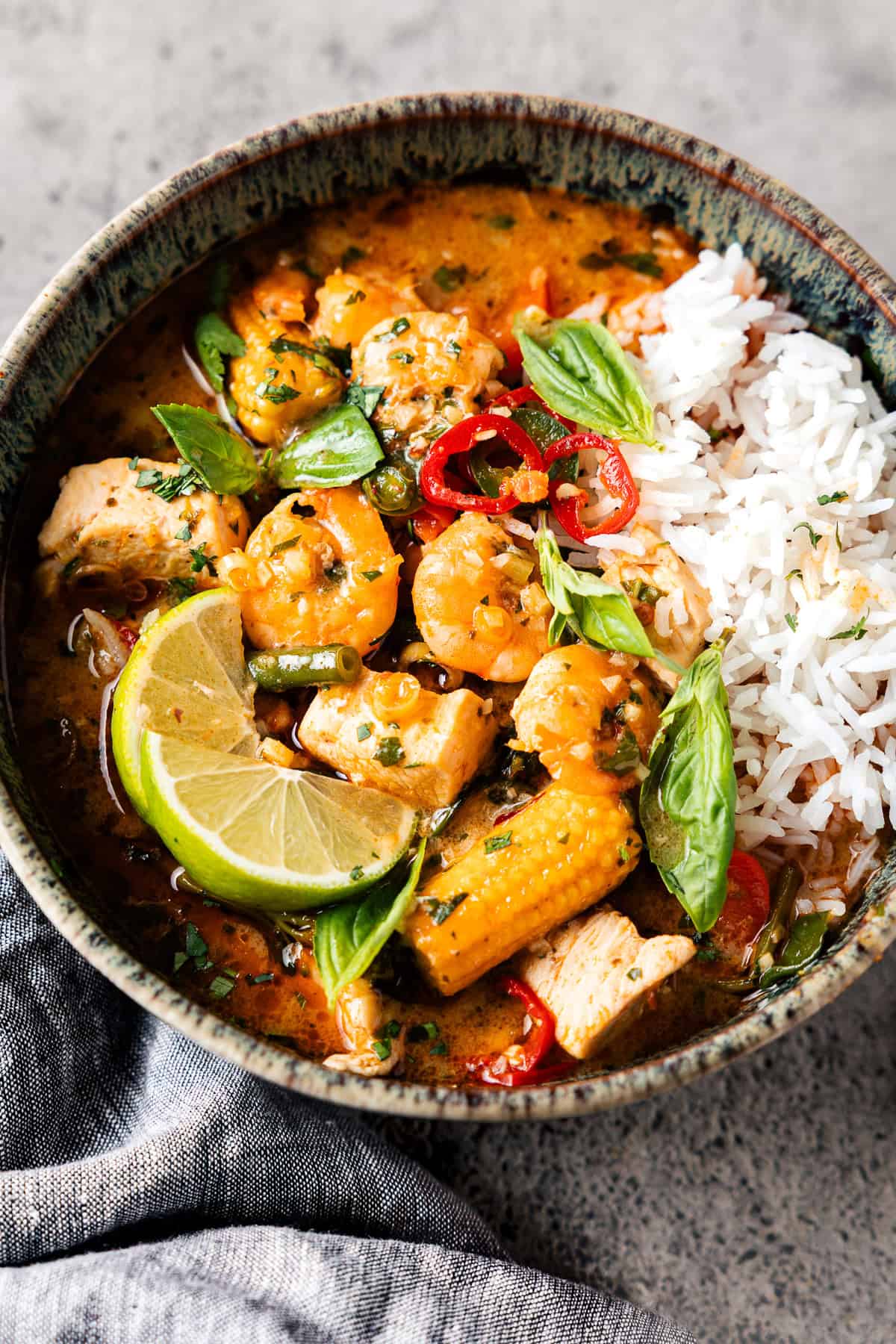
This Thai red curry is rich, creamy, and packed with flavor, with a fragrant coconut sauce and tender vegetables. It’s quick enough for a weeknight but tastes better than takeout, and works beautifully with chicken, prawns, tofu, or fish.
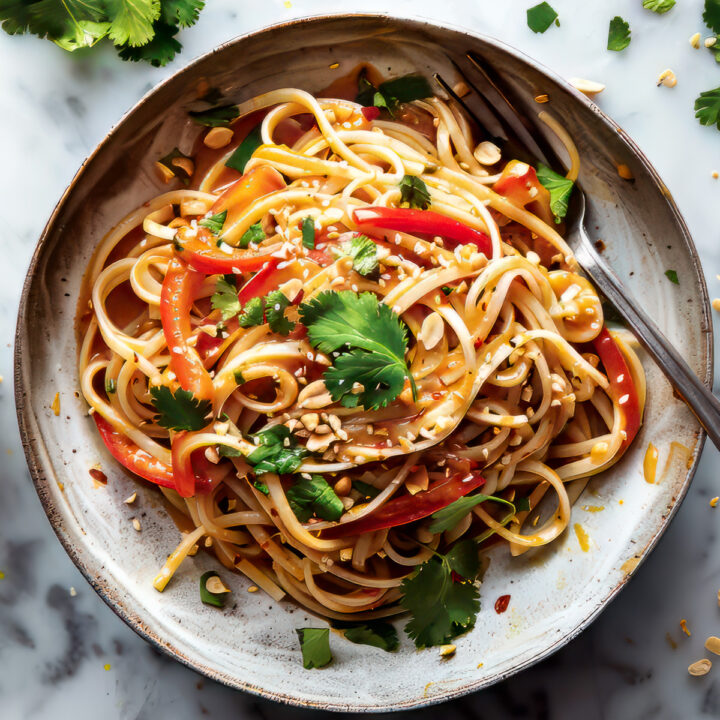
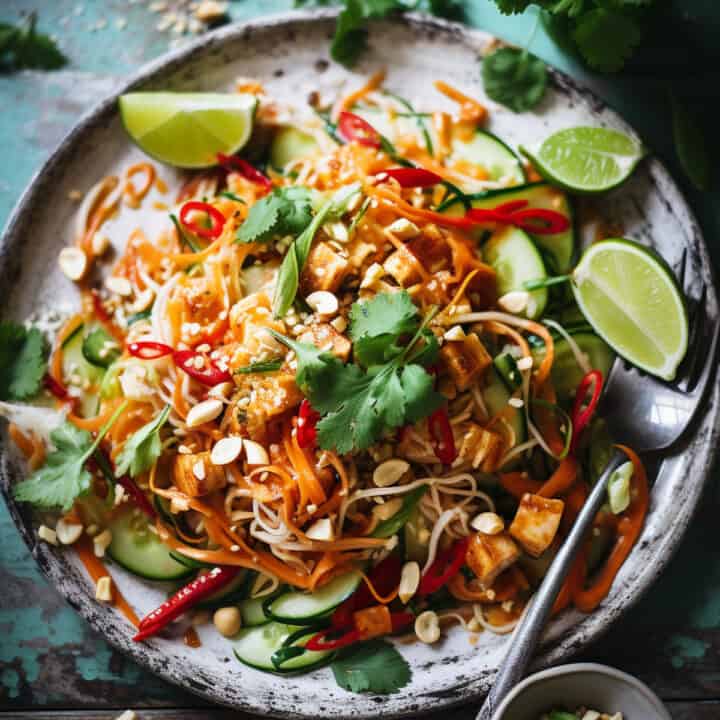
If you want to take this curry to the next level, you can use my homemade Thai red curry paste for a deeper, more authentic flavour. It’s simple to make and keeps well, so that you can build quick curries like this anytime. If you enjoy Thai-style cooking, you might also like my Thai peanut noodles or this easy vegetable pad Thai for more quick, flavour-packed dinners.
Why this Thai red curry recipe works
Ingredients Required
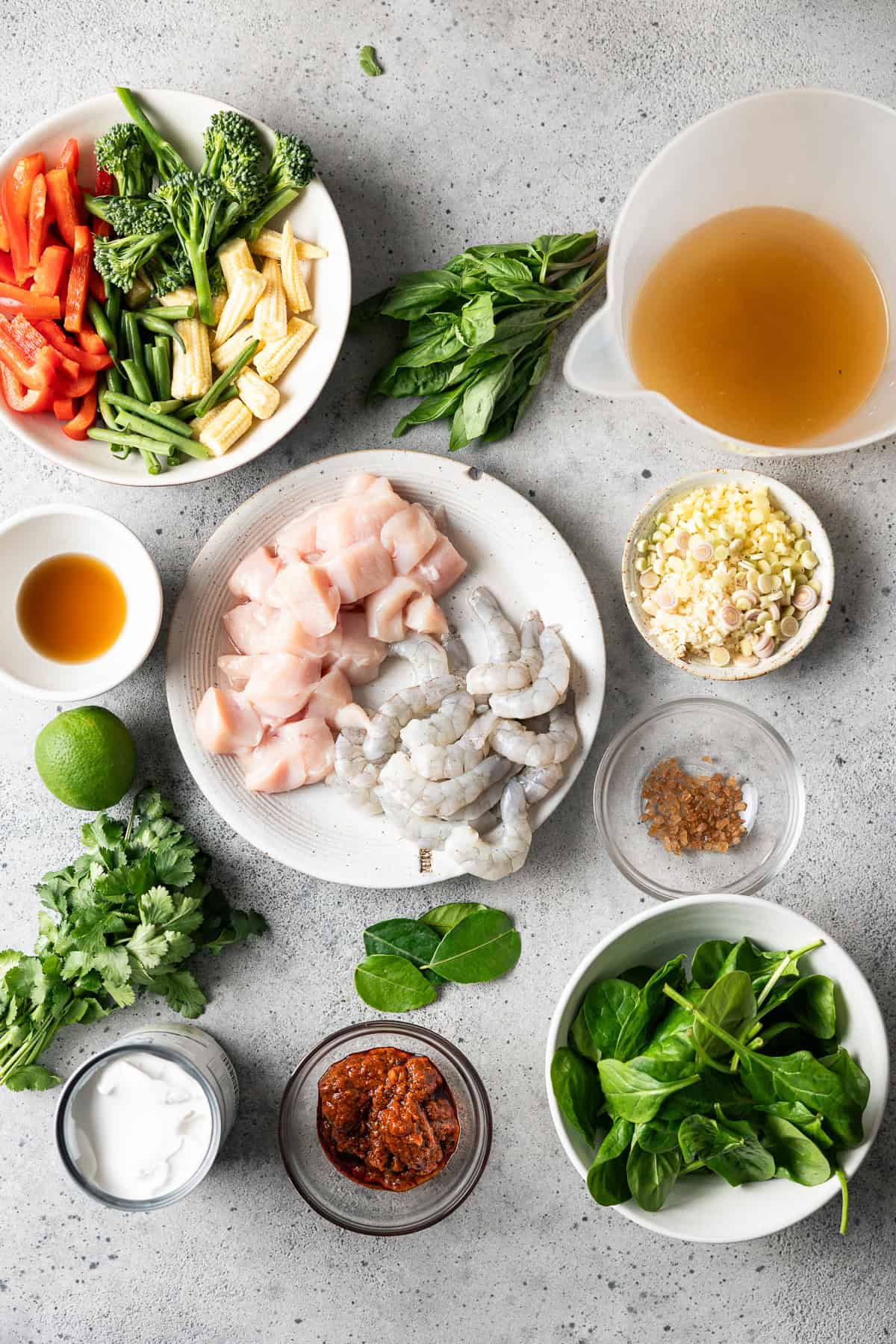
- Red curry paste – The foundation of the dish. Use a good-quality paste for the best flavour.
- Coconut milk (full-fat) – Creates a rich, creamy sauce and balances the spice.
- Fish sauce – Adds depth and that essential savoury, umami flavour.
- Palm sugar – Brings a subtle sweetness to balance the heat and salt.
- Lime juice & lime leaves – Brighten the curry and add fresh, citrusy notes.
- Garlic & ginger – The aromatic base that builds the first layer of flavour.
- Lemongrass – Adds a light, fragrant citrus note that defines Thai curries.
- Protein (optional) – Use chicken, prawns, tofu, or white fish, depending on what you have.
- Red pepper – Adds sweetness and colour.
- Baby corn & mangetout – Bring crunch and freshness.
- Spinach – Wilts into the sauce for a soft, balanced finish.
- Fresh coriander & Thai basil – For freshness and that classic Thai finish.
- Red chillies – Optional, for extra heat.
- Basmati rice – To serve and soak up the sauce.
Be sure to check out the full recipe and ingredient list below
How to Make Thai Red Curry
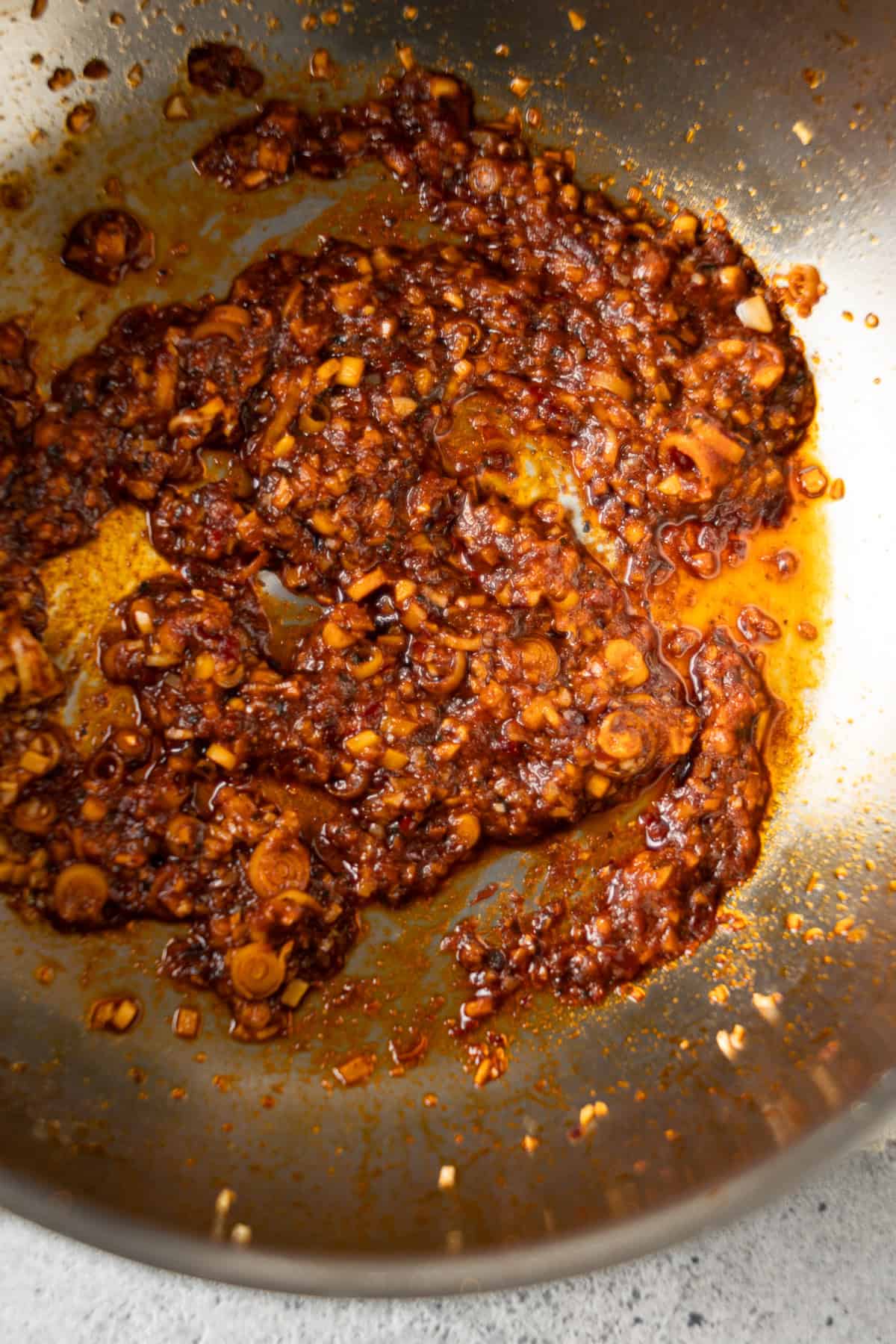
- Build the flavour base: Heat the oil in a large pan over medium heat. Add the garlic, ginger, and lemongrass and cook for 30–60 seconds until fragrant. Stir in the red curry paste and cook for 1–2 minutes, stirring, until it darkens slightly and the oil begins to separate.
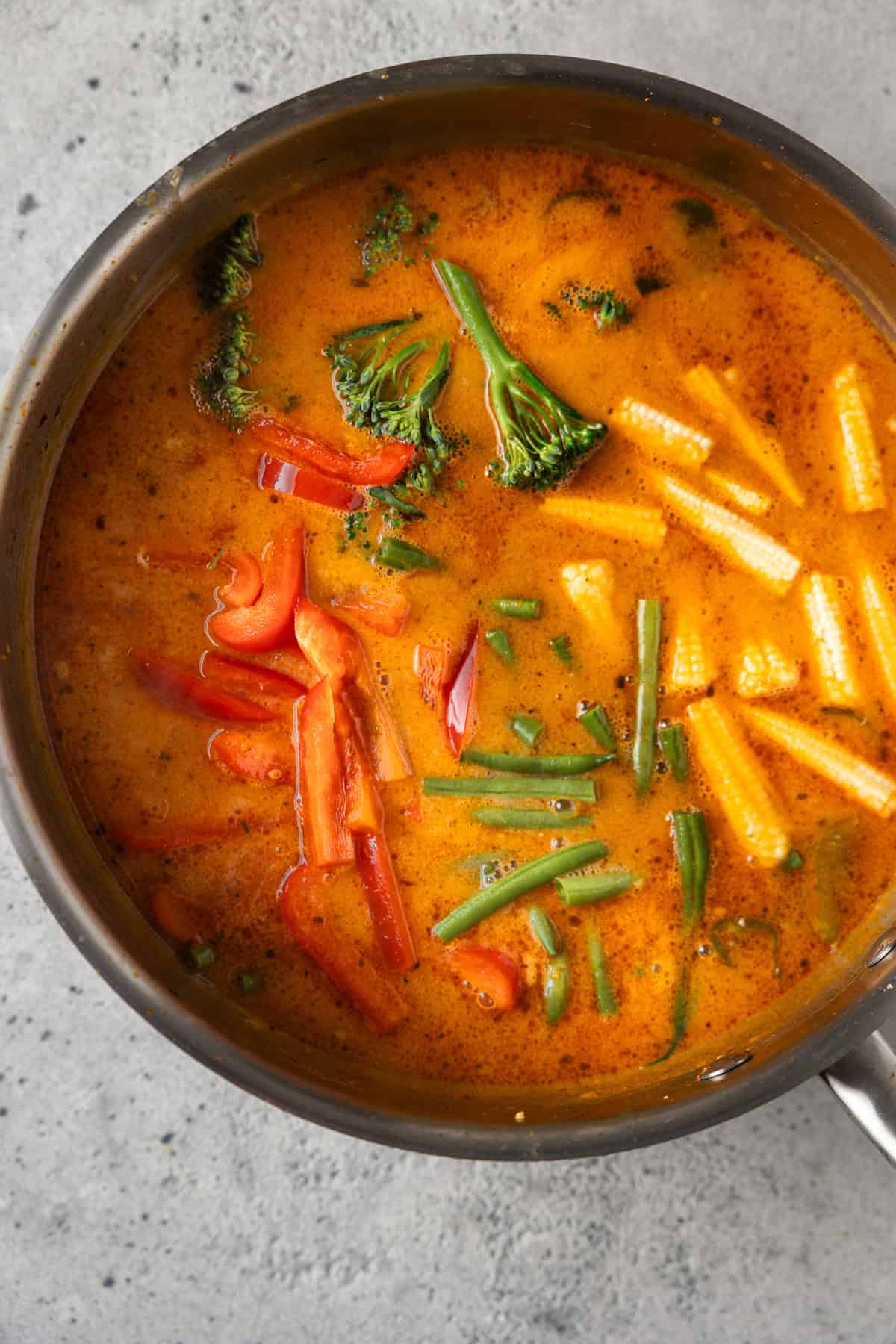
- Make the sauce: Pour in the coconut milk and chicken stock, then add the lime leaves, fish sauce, and palm sugar. Stir well and bring to a gentle simmer.
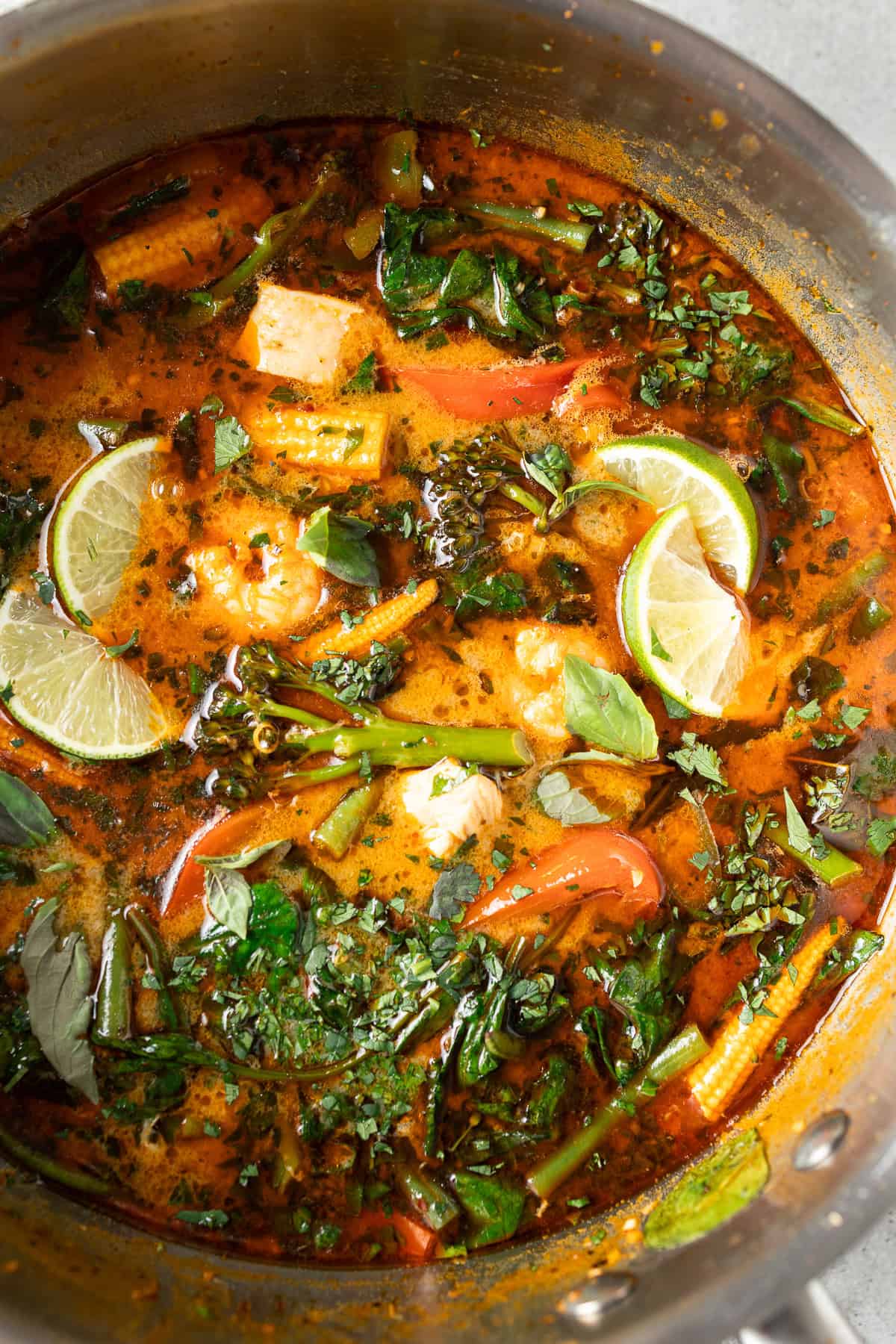
- Cook the protein: Add your chosen protein and simmer until just cooked through. Chicken will take a little longer, while prawns, tofu, or white fish will cook more quickly.
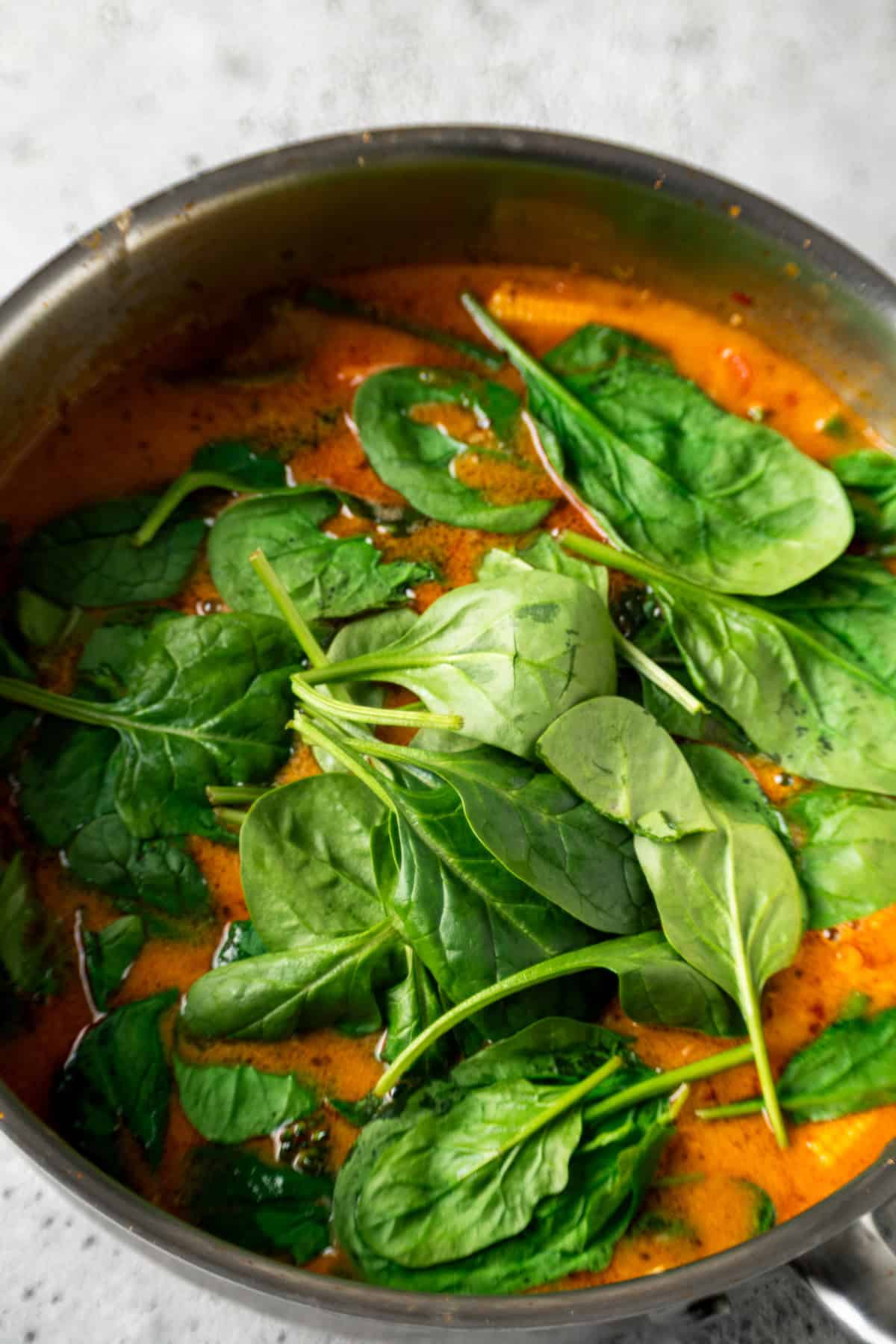
- Add the vegetables: Add the red pepper, baby corn, and mangetout and simmer for 2–3 minutes until just tender. Stir in the spinach and cook for another 1–2 minutes until wilted.
- Finish and serve: Add the lime juice, then taste and adjust if needed. Serve hot with basmati rice, fresh coriander, Thai basil, and sliced red chillies.

Chef’s Guide: Expert Tips
Drawing on a decade of experience in Michelin-starred kitchens and Cordon Bleu training, I have compiled my top tips for recipe success.
- Fry the curry paste properly: Don’t rush this step. Cooking the paste for 1–2 minutes deepens the flavor and removes any raw, harsh taste.
- Keep the coconut milk at a gentle simmer: Avoid boiling too hard once it’s added, or the sauce can split and lose its silky texture.
- Slice everything evenly: Keeping vegetables a similar size helps them cook at the same rate and gives a better final texture.
- Add delicate proteins later if needed: Prawns, tofu, and fish cook quickly, so you can add them towards the end to keep them tender.
- Taste and adjust before serving: The balance of salty, sweet, and sharp is key. Add a splash more fish sauce, a pinch of sugar, or extra lime juice to get it just right.
- Use full-fat coconut milk for the best result: It gives a richer sauce and helps carry the flavour of the curry paste.
What to do with leftovers
- Store any leftover curry in an airtight container in the fridge for up to 3 days. The flavours often deepen over time, making it even better the next day.
- To reheat, warm gently on the stove over low heat, stirring occasionally. Add a splash of water, stock, or coconut milk if needed to loosen the sauce. You can also reheat in the microwave, though the texture of the vegetables may soften slightly.
- For freezing, it’s best to freeze the curry without prawns or delicate proteins, as they can become overcooked when reheated. Freeze for up to 3 months, defrost overnight in the fridge, then reheat gently until hot throughout.
FAQs
It has a gentle to medium heat, depending on the curry paste you use. You can adjust the spice level by adding more or less paste, or by serving with extra coconut milk to mellow it.
Yes, a good-quality store-bought paste works perfectly and keeps this recipe quick and easy. If you have time, you can use my homemade red curry paste for a deeper, more complex flavour.
This recipe works well with chicken, prawns, tofu, or white fish. Just adjust the cooking time depending on your choice—prawns and fish cook much faster than chicken.
Yes, simply use tofu or vegetables and swap the fish sauce for soy sauce or a vegan alternative. The flavour will be slightly different but still delicious.
Yes, a small amount of oil separating on the surface is completely normal and actually a good sign. It usually means the curry paste has been properly fried, which helps develop deeper flavour.
However, if the sauce looks grainy or heavily split, it may have been cooked at too high a heat. Keep the curry at a gentle simmer once the coconut milk is added for a smooth, balanced sauce.
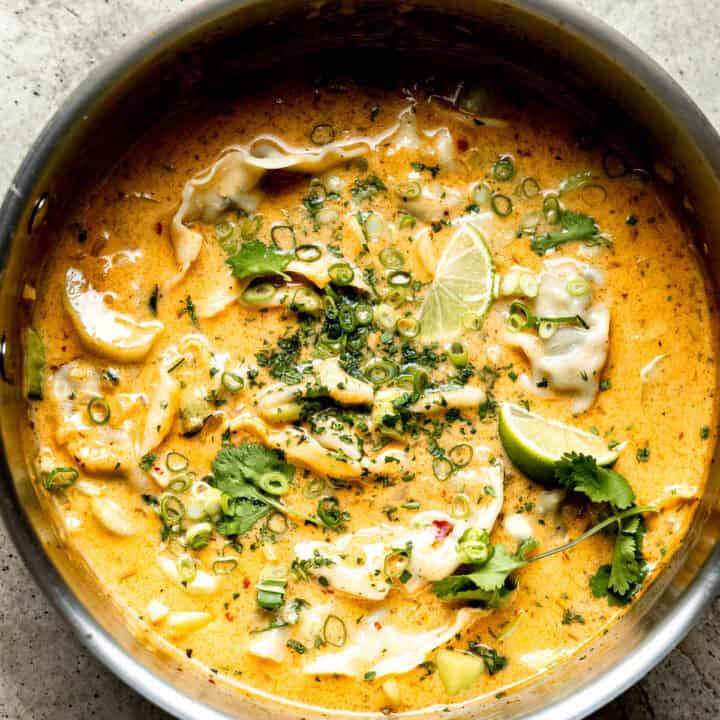

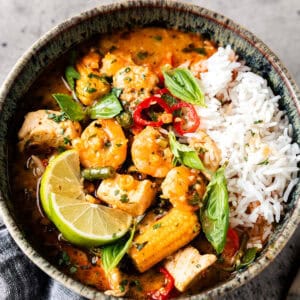
Thai Red Curry with Chicken & Prawns
Ingredients
- 1 tablespoon vegetable oil
- 3 cloves garlic, minced
- 1 tablespoon fresh ginger, grated
- 1 stalk lemongrass, finely sliced
- 2-3 tablespoons red curry paste
- 4 lime leaves, torn
- 14 oz can full-fat coconut milk
- ¾ cup chicken stock
- 1 tablespoon fish sauce
- 1 teaspoon palm sugar, or brown sugar
- Juice of ½ lime
- 1 pound chicken, cut into bite-sized pieces (optional)
- 10 oz prawns, shrimp, peeled and deveined (optional)
- 1 red bell pepper, thinly sliced
- 1 cup baby corn
- 1 cup snow peas, mangetout
- 2 cups fresh spinach
- Fresh cilantro, coriander, for serving
- Thai basil, for serving
- Red chillies, sliced, for serving
- Cooked jasmine or basmati rice, for serving
Instructions
Build the flavour base:
- Heat the oil in a large pan over medium heat. Add the garlic, ginger, and lemongrass and cook for 30–60 seconds until fragrant. Stir in the curry paste and cook for 1–2 minutes until slightly darkened and aromatic.
Make the sauce:
- Pour in the coconut milk and chicken stock. Add the lime leaves, fish sauce, and sugar. Stir well and bring to a gentle simmer.
Cook the protein:
- Add your chosen protein and simmer until just cooked through. Chicken will take longer, while shrimp, tofu, or fish cook more quickly.
Add the vegetables:
- Add the bell pepper, baby corn, and snow peas and simmer for 2–3 minutes. Stir in the spinach and cook until wilted.
Finish and serve:
- Add the lime juice, taste, and adjust if needed. Serve with rice and top with fresh herbs and chillies.
Notes
- Curry paste matters: Use a good-quality paste for the best flavour. Start with 2 tablespoons and adjust to taste.
- Fry the paste: Don’t skip this step—it deepens the flavour significantly.
- Gentle simmer: Keep the heat low once the coconut milk is added to prevent splitting.
- Protein flexibility: Works with chicken, shrimp, tofu, or white fish—adjust cooking times accordingly.
- Balance at the end: Adjust with more lime, fish sauce, or sugar to get the perfect balance.
- Freezer tip: Freeze without shrimp for the best texture. Add fresh when reheating if possible.
Nutrition
If you tried any of these recipes, please let me know in the comments below, and leave a star rating while you’re there!
For more recipe ideas, follow us on Pinterest, Facebook, and Instagram!
You can also find weekly meal plans and budget recipes on our sister site Savvy Bites.

Meet the Chef!
Hi, I’m Debs, a Cordon Bleu-trained chef and recipe developer. I help you get incredible dinners on the table fast with fool-proof recipes, step-by-step instructions, and tips and tricks I’ve learned over a 10-year career in professional kitchens.